
How to Connect to a VPS Server via SSH (Step-by-Step)
7 Aug 2025

By
Mark Hayes

New to VPS hosting? Learn how to connect to your server via SSH in under 5 minutes — step-by-step for beginners. 🖥️🔐
Start with a fast VPS from nanohost.org — from $8/mo in 5 locations.
How to Connect to a VPS Server via SSH (Step-by-Step Guide)
So, you’ve just bought a VPS — great! 🎉 Now, you need to connect to it.
The most common and secure way is via SSH (Secure Shell). This guide will show you how to connect to your server using Windows, macOS, or Linux — even if you’ve never done it before.
What is SSH?
SSH stands for Secure Shell. It lets you securely access and control your VPS from anywhere using a command-line interface (terminal).
Think of it as remote control for your server.
Step 1: Get Your VPS Info
When you purchase a VPS (e.g., from nanohost.org), you’ll receive:
- Your server IP address
- Your username (usually
root) - Your password or SSH key
Example:
IP Address: 45.12.34.56
Username: root
Password: abc123xyz
Step 2: Open a Terminal or SSH Client
🔹 On macOS or Linux:
Just open the built-in Terminal.
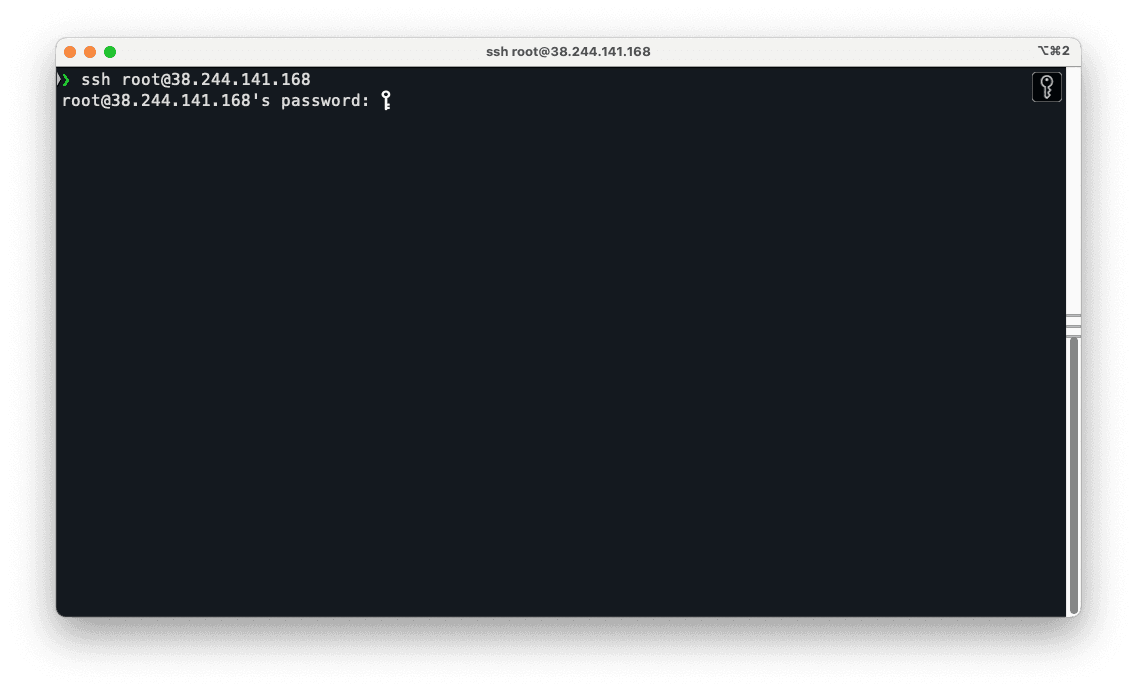
Then run: ssh root@45.12.34.56
When prompted, type yes to trust the connection, then enter your password.
🔹 On Windows:
Option 1: Using Windows Terminal (Windows 10/11)
Press Win + S, type “Terminal” and open Windows Terminal or Command Prompt.
Then run: ssh root@45.12.34.56
Enter your password when prompted.
Option 2: Use PuTTY (if you're using older Windows)
- Download PuTTY from putty.org
- Open PuTTY and enter your server IP in the “Host Name” field
- Set Port to 22
- Click Open
Enter root as the username, then your password
✅ You’re Connected!
Once connected, you’ll see something like this:
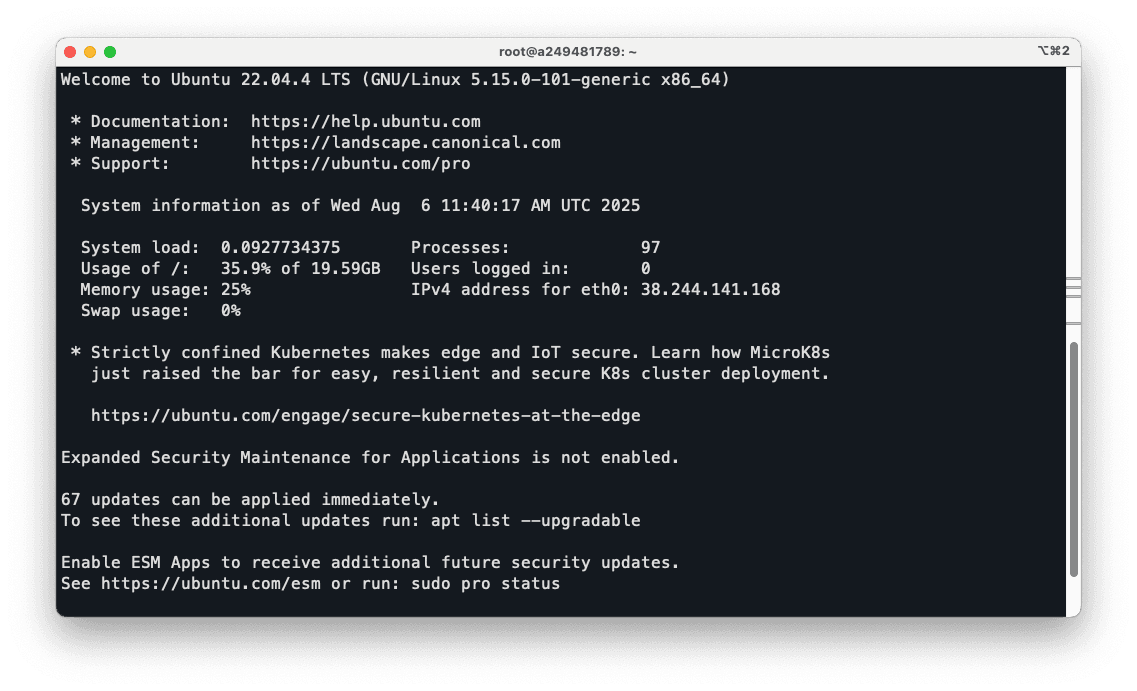
You’re now inside your server and can install software, run services, or configure anything you want.
💡 Tips
- Don’t share your server IP or root password with anyone
- Use exit to log out from the server
- You can change your password anytime with
passwd - Keep your system updated:
apt update && apt upgrade
🚀 Get Started with a Reliable VPS
Need a VPS to practice with? Try nanohost.org:
- 🖥️ Fast SSD VPS with full root access
- 🌍 Locations in the US, EU, and Asia
- 🔐 SSH access ready out of the box
- 💸 Starting from just $8/month
Perfect for learning, hosting projects, or building your own tools.
Read also

How to Change the Timezone on a Linux Server Using the Terminal
Learn how to change the timezone on any Linux server directly from the terminal. This step-by-step guide explains how Linux handles timezones, how to view available options, and how to safely switch your server to the correct region — with detailed explanations, not just command snippets.
How to Reboot Linux Now (Safely): systemctl reboot, shutdown -r now, and Force-Reboot Options
Whether you’re applying kernel updates, clearing a stuck device, or finishing a configuration change, a reboot is sometimes the cleanest fix. This guide shows beginner-friendly and safe ways to restart Linux immediately (“reboot now Linux”), plus how to force reboot if the system is unresponsive. We’ll cover desktops, servers, and remote machines over SSH.

Linux Reboot Command Detailed Tutorial
Learn how to reboot a Linux system the right way. This guide explains safe reboot methods, common issues, and practical tips for servers, desktops, and automated scripts.